God’s Church

“Instead, speaking the truth in love, we will grow to become in every respect the mature body of him who is the head, that is, Christ” (Ephesians 4:15).

Jesus is the head of the church. Whenever the church gets this wrong, everyone suffers. The church suffers. The world who needs Jesus suffers.

“The Church, as a whole, is doing more and more. And the church, as a whole, is making less and less of a difference” – @simplechurch.
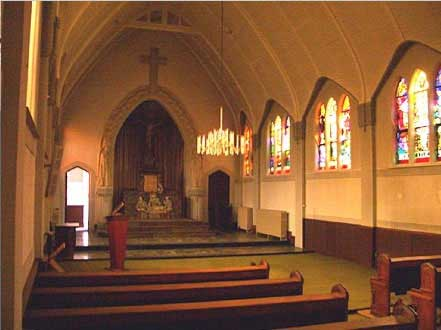
While I don’t claim to have “the” answers or be any sort of an expert on the issue of solving the problems of the church’s relevance in a post-modern, post-denominational, post-Christian world, I do think there are some things for us to consider.

  • If it ain’t working, stop!!! We’re wasting people’s time, talents, and finances. If whatever it is we’re currently doing that’s not producing the results we want to experience – STOP!!! 
  • Get strategic. Know what it is that we are trying to produce, and if it’s not producing the results, then don’t do those things anymore. The purpose of the Little Church and Lakewoodgrace is to “Make Disciples and Grow Faithful Disciples Who Share the Love of Christ with All People.”
  • Pray. God really does answer prayer. Seriously. Pray. The church needs to pray. It’s not about human ingenuity. It’s not doing our best. It’s God’s church. He already has a plan. It’s our job to execute God’s plan. And in order to know God’s plan, we must pray and listen.

God’s placed our churches for a reason – and that reason can’t be become a totally irrelevant relic in the community. God has a plan and purpose for the Little Church and Lakewoodgrace being here. God wants us to be effective in “Making Disciples and Growing Faithful Disciples Who Share the Love of Christ with All People.

That means that God has a solution to the issues we’ve been dealing with. God knows what to do with his facilities. God knows we need to remodel, repair, or build anew. Not only does God know we need to update our facilities, God knows how he is going to pay for it!

It’s time for us to pray, listen, evaluate, and plan.

As Forrest Gump once said, “That’s all I want to say about that.”
It’s Not about How Long You Live. It’s How Much Life You Live

“Teach us to number our days, that we may gain a heart of wisdom” (Psalm 90:12).

Everyone dies. Not everyone lives.

Brandon just turned eleven before the tumor that he’s been battling since he was four finally took his life.

As a pastor, I have the privilege of being with folks both at the very beginning of life and as people draw their last few breaths.

I’ve been thinking about the events of the past week and I can’t help but wonder how anyone could think that life is only about what happens here in this world for the few years of our existence. How can people not see that God created us with a soul that’s supposed to live forever.

How could we possibly think that there was no life until that baby breaks the threshold of mommy’s body? That life didn’t start for that baby until she was born?

And how could it be that a person who was living and breathing could, just like that, in moments be gone forever?

We know in the core of our being that there is more because God created every single person with a soul. The body we live in now is only a temporary home. Our souls live on forever – either in the presence of God or forever apart from Him.

Here’s what Brandon taught me this week. That life is not about how long you live – but all about how much life you live. Brandon might have only lived for 11 years, but that boy truly lived. He lived for more than himself. He lived to make a difference. He impacted lives wherever and whenever he was. And now, because Jesus is his Lord and Savior, Brandon continues to live forever more in the presence of God.

Looking forward to the day when I will see you in person. And the next time, we’ll have all of eternity.

Lifesaving Station – a Parable

On a dangerous sea coast where shipwrecks often occur, there was once a crude little life-saving station. The building was just a hut, and there was only one boat, but the few devoted members kept a constant watch over the sea, and with no thought for themselves, went out day and night tirelessly searching for the lost. Some of those who were saved and various others in the surrounding area wanted to become associated with the station and gave of their time and money and effort for the support of its work. New boats were bought and new crews trained.

The little life-saving station grew.

Some of the members of the life-saving station were unhappy that the building was so crude and poorly equipped. They felt that a more comfortable place should be provided as the first refuge of those saved from the sea. They replaced the emergency cots with beds and put better furniture in the enlarged building. Now the life-saving station became a popular gathering place for its members, and they decorated it beautifully because they used it as a sort of club. Fewer members were now interested in going to sea on life-saving missions, so they hired lifeboat crews to do this work. The life-saving motif still prevailed in the club’s decorations, and there was a liturgical life-boat in the room where the club’s initiations were held. About this time a large ship wrecked off the coast, and the hired crews brought in boat loads of cold, wet and half-drowned people. They were dirty and sick. The beautiful new club was in chaos. So the property committee immediately had a shower house built outside the club where victims of shipwrecks could be cleaned up before coming inside.

At the next meeting, there was a split among the club membership. Most of the members wanted to stop the club’s life-saving activities as being unpleasant and a hindrance to the normal social life of the club. Some members insisted upon life-saving as their primary purpose and pointed out that they were still called a life-saving station. But they were finally voted down and told that if they wanted to save lives of all the various kinds of people who were shipwrecked in those waters, they could begin their own life-saving station. So they did.

As the years went by, the new station experienced the same changes that had occurred in the old. It evolved into a club, and yet another life-saving station was founded. History continued to repeat itself, and if you visit that sea coast today, you will find a number of exclusive clubs along that shore. Shipwrecks are frequent in those waters, but most of the people drown.