
Category: Uncategorized
I Have Never Loved the Lord with All My Heart, Soul, and Mind
 I have never loved the LORD with all my heart, soul, and mind.
I have had occasions and moments in which I loved God like that, but never an entire day when I’ve loved God like that.
I aspire to do so. That’s my goal every morning. But soon into most days I’ve already failed.
It’s not because there isn’t enough “want to” on my part. I have plenty of “want to”. The reason I fail is because I wrestle, struggle, and contemplate sinning all day, everyday.
What’s crazy is that even when I am obeying God, I don’t obey God without, at the same time, having a part of me wanting to sin.
If loving God with all my heart, soul, and mind means having 100% fully devoted to God 100% of the time, I fail 100% of the time, and will continue to do so until I am in Christ’s presence.
In the mean time, my struggle is to live more like Christ today than I did yesterday…being more like Christ in my thinking, desires, and in being today than I was yesterday.
Being changed and being transformed into the likeness of Christ is a process. Being changed and transformed is not an event.
I am being changed and being transformed every time I yield to the will of the Holy Spirit more than I yield to my flesh. Every time the Holy Spirit prompts, convicts, reminds, and encourages me to choose holiness, righteousness and I yield to him rather than to my flesh, I am being changed and transformed.
Yielding doesn’t mean I don’t have sinful desires. Even when I am in the process of obeying, my flesh rages and battles for control. But if my yielding to the Holy Spirit is greater than my yielding to the flesh, then I am being changed and transformed.
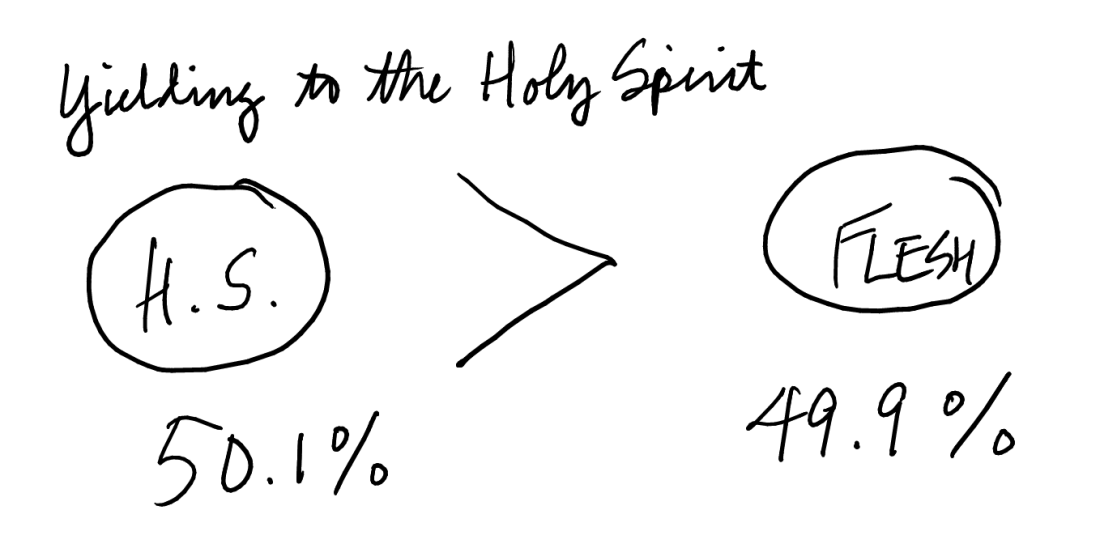 We are being transformed into the image of Christ each time the Holy Spirit has his way with us rather than our flesh.
This is my goal. This is my aspiration – more of the Holy Spirit and less of my flesh.
Stop Telling Your Kids They Can Be Whatever They Want to Be – It’s Not True

Stop telling your kids they can achieve and be whatever they want to be.
That’s simply not true and it sets them up for failure.
- Not every kid will be a great singer. Some people flat out can’t sing
- Not every boy will be a great athlete. Some people don’t have an athletic gene in them
- Not every girl will be a great ballerina
- Not every kid will grow up to be the president of the United States…there can only be one at one time
What every child needs is to discover why they’ve been created. What their purpose for living is. Help each child discover their God-given purpose. Let your child know that God created them with a combination of gifts, talents, and a temperament that makes them absolutely unique in all of human history. And God placed them in your family and in this particular time because our world needs them to be everything God created them to be.
Help your child discover their God given purpose.
This leads to genuine happiness, a sense of purpose, and a sense of call for their lives.
I know we mean well when we tell our kids they can be anything they want to be. But that’s both not true, and it is not helpful.
Parents, help your child discover why God placed them on planet earth and help your children soar.

